


Verti-Can? or Verti-Can’t?
The Meteroric Rise of Vertical Video
What’s been cracking at WING? Well, our visceral films starring Andy Murray, Johanna Konta and Kyle Edmund for Jaguar working with CAA were released to the world.
The idea was to underpin the Jaguar proposition of #ShowYourEdge and it was an honour to delve deep into our tennis stars’ psyche and find that edge, and quite frankly, seeing Andy Murray smash a tennis ball in the rain in super slo motion is something not many people will have seen before, so enjoy!
PING released the first of our #FittingFriday with Lee Westwood series and we’ve got a bunch of other super fresh projects including four TV commercials for Aberdeen Standard Investments and a secret project for McLaren which are all ready to burst out into the world over the coming weeks.
Vertically Un-Challenged
Vertical is the future of content as we know it’. There, we said it. We can feel advertising execs all over the country nodding in agreement whilst directors and cinematographers spit out their organic matchas all over their vertically held mobile devices in disgust! The emergence of social platforms and smartphones have seen a huge change in how we consume content and as you know from our most recent WING Perspective, our ideas of celebrity and the nature of content is constantly evolving. Vertical video has traditionally been seen as the depressing output of quite frankly, someone who doesn’t quite know what the hell they are doing…But this perception is changing, and it is changing FAST. So much so that we are on the cusp of a monumental ‘reshaping’.
How many politely worded ‘suggestions’ or even full-blown family fights have taken place when an uncle or aunt of a certain age have captured ‘that Kodak moment’ (or in this case iPhone or Samsung moment) in the wrong way? What about your younger sibling who hasn’t quite worked out that their childhood masterpiece won’t look like the latest Avengers film but in fact a thin ‘monstrosity’ with two MASSIVE black bars either side of it as soon as they watch it on their computer? In filmic terms, wider has always meant better.
From anamorphic cinemascope to 70mm IMAX; the more info, the ‘better’ the visual, right? Debatable… but we do know we are on our phones much more often than being sat in the cinema. For consumers, at most, a cinema experience is weekly, a television experience is daily but a phone experience is minute…ly. We are on our phones CONSTANTLY, 60% of videos are currently being watched on phones and tablets and a staggering 94% of us interact with our phones, yep you guessed it, vertically. Surely, it makes perfect sense for content to be filmed in the way it is now consumed on our devices, rather than having to make a vertical version as a second thought?
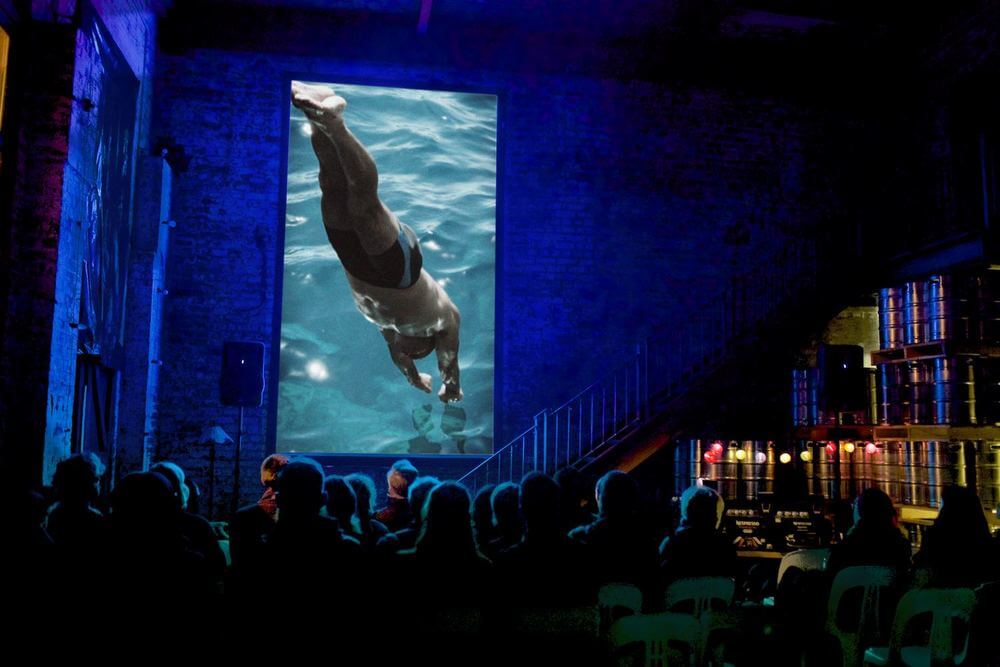
Lets Get This Straight
Vertical video has been on the up for a number of years but only recently has the industry really started to cater for it. The smartphone big hitters have made vertical-specific portrait modes and camera specs and Snapchat, as it happens, pioneered the vertical rise (euphemism intended) in the social space. Twitter followed and of course, Instagram and Facebook took the leap in a big way with their ‘Stories’ functions. On top of this, a plethora of websites and apps have adapted but the biggest marker in the sand was when YouTube finally ‘gave in’ with their full-size vertical upload option and their subsequent vertical-only record and upload tools. This has been a huge catalyst for change and thousands of vertical videos are now uploaded daily. MediaBrix found a 90% higher completion rate for vertical videos compared to horizontal videos. They also found that less than 30% of users are turning their phones sideways to watch an ad and they only watch 14% of each ad!
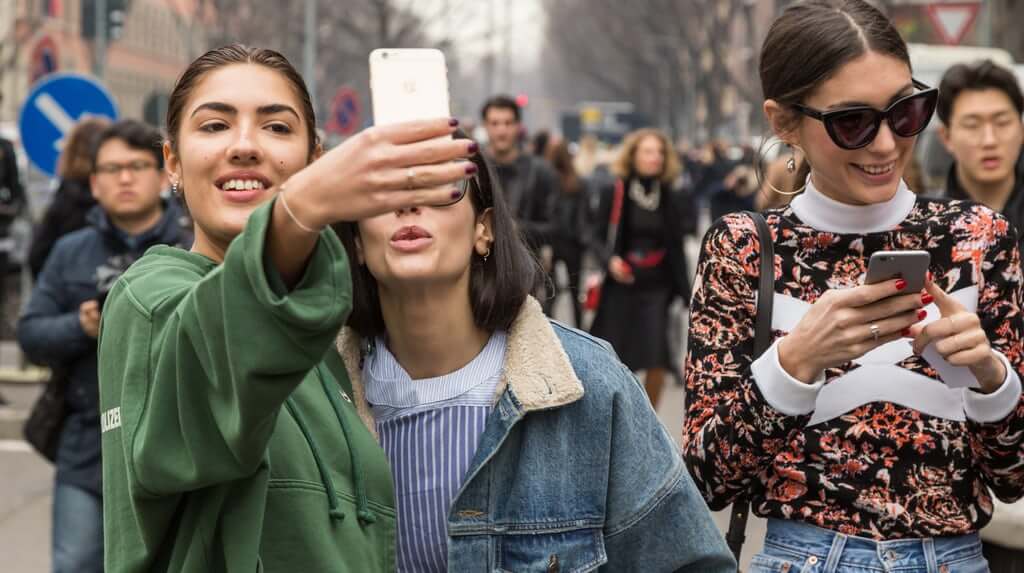
UGC goes hand in hand with vertical and it’s at the height of its powers. We’ve all seen branded content, TVCs and even film trailers adapted for social (at 9:16 (portrait) or even 4:4 (square to soften the blow for the horizontal purists)). Clearly more outlets are catering for the medium but are brands actually embracing it? The answer is an emphatic HELL YES. ESPN has even created a vertically oriented version of their flagship show SportsCentre.
Steve Braband, ESPN’s Director of Digital Video Operations is a true believer:
“If you follow best practices and spend time producing, specifically for each platform, you’ll be able to better position your content in fans’ newsfeeds”.
But what is it about vertical that is so appealing? Is it simply a convenient by-product of our phone-holding preferences? To base the future of how we film content on that idea is a truly depressing thought to many of us. The good news is that there are other, much more vital reasons as to why the world is going vertical.

Wanna Get Intimate?
The secret ingredient of the vertical beast is INTIMACY. Filming on our phones is by its very nature intimate. With the rise of influencers and UGC, and our favourite traditional stars telling us what they eat for breakfast on social platforms, the more intimate they get, the better. And what are the vast majority filming on? Yep, their phones… hence the power of vertical.
On ESPN’s move, Nathan Peterson from Forbes states:
“The content gives fans a more intimate look at their favourite athletes in the moment, pulling in coveted views from behind the scenes using Snapchat and Instagram and producing it directly into their stories live on air”.
Vertical also lends itself well to interactivity through augmented reality and ease of use for one-handed speed-likes, stickers and emoticons.
It’s not only the intimate nature of vertical video that works; after all, many full-blown vertical music videos are made specifically for social (Ariana, Camilla, and Selena? Holla!) although interestingly, they still, on the whole, have significantly decreased budgets. Many are simply adapted from the ‘hero-ed’ 16:9 versions too.
But what about vertical’s artistic merit? Is there one? It definitely looks that way. Its restrictive nature poses an interesting challenge for filmmakers with the viewer’s focus being honed in on the centre of the screen at all times. Perhaps the fewer pixels a filmmaker has can ensure one is more calculated in their approach to filmmaking?
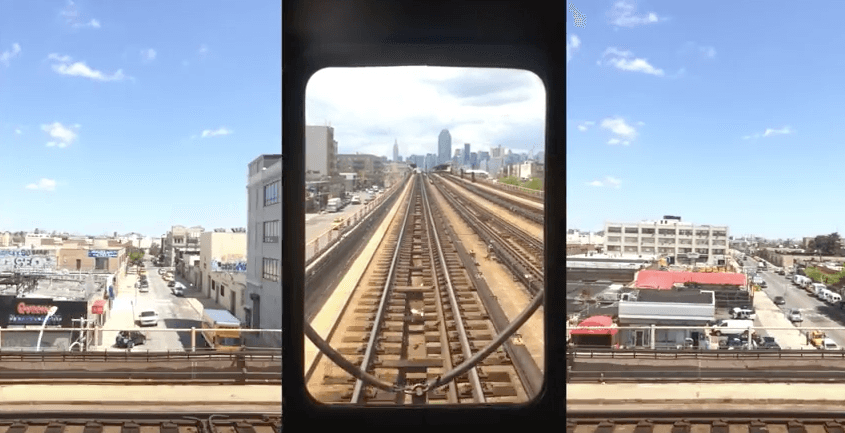
Furthermore, what about the merits of portraiture? This is a seriously relevant point that the detractors of ‘Verticalism’ (yep we’ve coined the name for it!) ignore. From the dawn of our artistic consciousness, as we know it, portraiture has always been there. Let’s look to more recent times. From Rembrandt’s iconic paintings to Stieglitz’s mind-blowing photography, portraiture has created some of the most stunning images that we ever have seen. And what about film? That hasn’t always been horizontal either. Aspect ratios have been experimented with thousands of times. Wes ‘everything must be even’ Anderson is even applauded for his moving ratios in The Grand Budapest Hotel, so why the controversy and where do we go from here?
WINGpinion
We go vertical, that’s where. Well, in addition to horizontal. Widescreen and horizontal will not be going anywhere but neither is vertical and if we are to be heard and seen in the content world, we must absolutely embrace it. Nespresso is leading this embrace in a truly ground-breaking way.
Nicolas Duplaix, Global Sponsoring & Events Manager at Nespresso, tells us that in order to push innovation and re-cement their strong relationship with film, the company: “wanted to celebrate this rapidly emerging medium and to help talented content creators reach a wider audience.”
Nespresso Talents, launched in 2016, is a global program of vertical films that bring together millennials’ passion for film (and Nespresso’s brand purpose) to inspire tasteful and meaningful living. The program delivers: “a new angle to an old format, challenging filmmakers to produce vertical film for mobile consumption”.
Here at WING we are all for adapting to the ever-evolving advertising landscape. As filmmakers, the idea of shooting vertical is uncomfortable for some and we must re-calibrate ourselves to think of it as an art form rather than a compromise. As you can see from our top three picks of the month below, the medium can be used in a practical AND an aesthetically beautiful way. Fully fledged change within the worlds of TV and Film might be a long shot, despite recent attempts (to change actual cinema screens by some), but in the world of content, VERTICAL HAS MOST DEFINITELY ARRIVED. It is the NOW and it is HERE.
WING’s Top Three Vertical Films
Nespresso Talents 2017 Trailer – ‘You Have the Power To..’
In putting together a call out for the best vertical work of 2017, Nespresso actually made one the best ones we’ve seen yet. It’s a fast, kinetic, and vertically thrilling journey through some of the most of the most influential moments and works of art in history.
Rudy Mancuso & Maia Mitchell – ‘Magic’
We love the use of vertical for the ‘Magic’ music video. Starting with a simple visual of Rudy Mancuso, his guitar, and an animated dragonfly (clearly not deviating from its vertical border), the film expands into a beautiful neon, underwater dreamscape.
‘An Ordinary Life’ by Lidia Sheinin
This was one of the winners of Nespresso Talents 2016. Shenin manages to utilise the medium for an intimate, amusing and touching look into the lives of her and her family. The production value is limited but it is a highly impressive and charming piece. She even uses vertical in such a way that it might just be the first Wes Anderson-esque vertical indie film.
Drop a comment below…

