


LET’S GET META.
LAST MONTH AT WING.
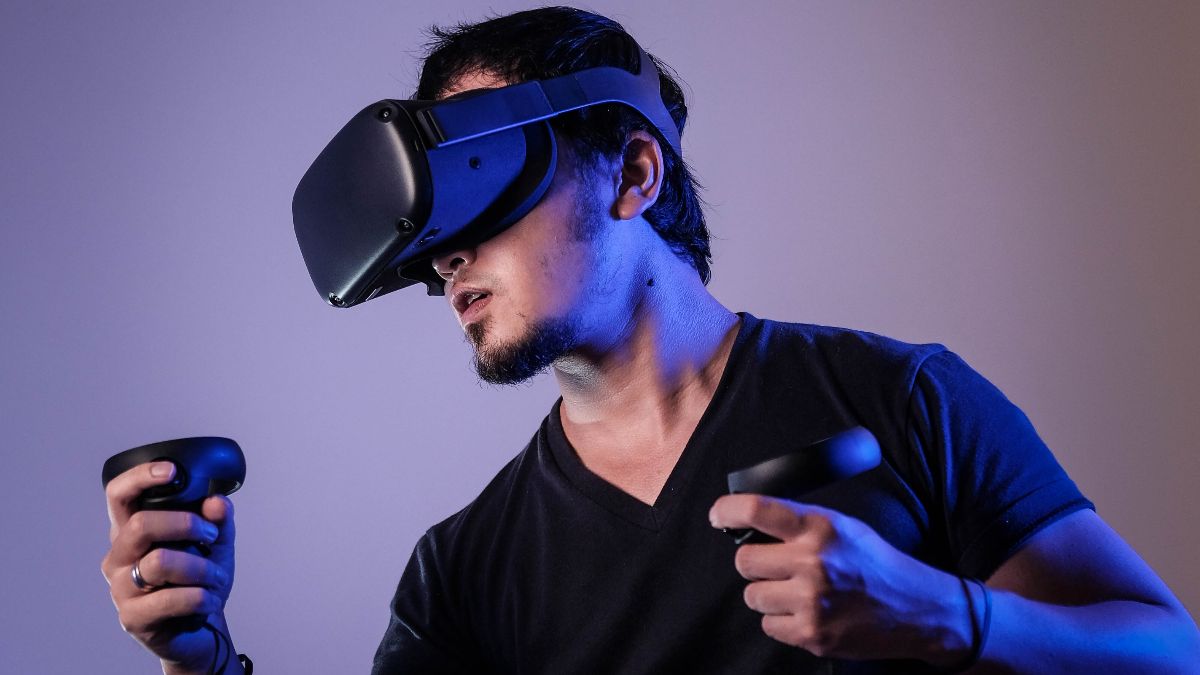
It’s definitely got us thinking here at WING; curious about what it will mean for agencies and brands alike, especially since the release of our films with CAA for OKX, McLaren and Man City, showcasing OKX’s new brand image based around the look and feel of metaverse and cyberpunk. And so we rightly ask- what the heck is the metaverse, what can we do there and why should we care?
QUICK UPDATE.
We just released ‘Take a Breath’ with Tom Hiddleston for Formula E and UNICEF, a short film that aims to raise awareness and highlight the importance of clean air, in order to make a better, safer world for every child. Set in an art gallery backdrop to underpin the power of clean air and thought, we captured this in one shot to enable the viewer to truly take a breath while watching the film, considering the harsh reality of polluted air in cities but also the positive move towards progress. The God of Mischief was an absolute pro and insisted on one final walkthrough – take 17 – which turned out to be the money shot. Read more about it here in The Drum.
METAVERSE.
Talking about the metaverse, I imagine, is like talking about the internet back in the 80s. Everyone talking about it with the feeling that it would most likely influence their lives in some way but no one quite knowing how it might work. But, believed to be an $800 billion market by 2023 with huge giants like Facebook, Google and Apple all investing big money to get behind it, it’s time to lock down what it’s all about.
It’s difficult to pinpoint the metaverse’s origin but many say that the word metaverse was first coined by author Neal Stephenson in his 1992 sci-fi novel Snow Crash as an all-encompassing digital world that exists parallel to the real world. Whilst widespread adoption of a fully realised metaverse is still far off, we can all start to prepare as we transition into this space by understanding and demystifying some of the metaverse’s building pieces. Facebook’s CEO Mark Zuckerberg (which he rebranded to Meta last year) told The Verge that “You can think about the metaverse as an embodied internet, where instead of just viewing content – you are in it, and you feel present with other people as if you were in other places, having different experiences that you couldn’t necessarily do on a 2D app or web page, like dancing, for example, or different types of fitness.”
Essentially then, the metaverse is an extension of the internet, a more immersive and 3D experience. It isn’t one thing, it’s tangible, combining virtual, augmented and mixed reality worlds that can be accessed through a browser or headset, enabling people to have real time interactions and experiences across a distance. We’re imagining it as a collection of digital “stuff” that exists in tandem with our physical lives, an assemblage of virtual worlds, where users can meet people, play games, chat and buy things (think NFTs and blockchains – a whole other facet) without being bound by physicality. Goggles can be used to reach these environments, whilst other metaverses can be found in video games or augmented reality locations where objects from the virtual world are projected onto the actual world via our displays.
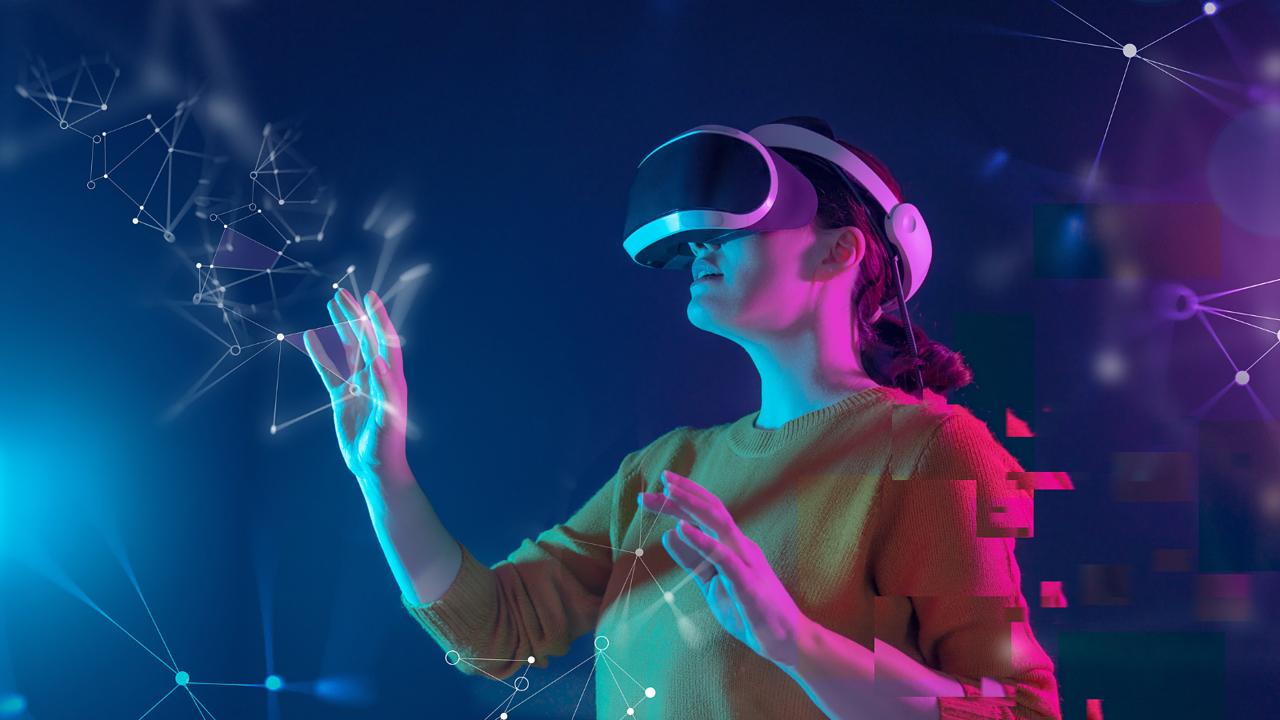
So you might be asking why it matters to us? Mark Zuckerberg, while explaining Metaverse in 2021 said, “You’re going to be able to bring things from the physical world into the metaverse. Almost any type of media that can be represented digitally: photos, video, art, music, movies, music, books, games, you name it” and we think this is a pretty strong argument to start paying attention. Metaverse hype already has many brands and their agencies seizing on the chance to market to those interacting in these virtual spaces. Brands must be committed to remaining one step ahead of competitors, naturally gravitating to where consumers are showing more interest in an effort to facilitate these digital experiences with 25% of people spending an hour in the Metaverse and 30% of companies offering services and products for the metaverse by 2026.
EXAMPLES WITH BRANDS.
COCA COLA
Coke teamed up with 3D digital design studio Tafi to run an NFT campaign centered around ‘loot boxes’ – essentially these were virtual goodie bags that contained a variety of one of one digital assets, including a branded puffer jacket wearable NFT, a “friendship card” NFT (a very clever digital revival of the brand’s famous 1940s trading cards) and a sound visualiser NFT which “captures the experience of sharing a coca cola.”
NIKE.
Nike made headlines last November and created Nikeland on Roblox- a branded and virtual free interactive sports space which had almost 7 million players. They also made headlines one month later when acquiring RTFKT, a NFT studio with a niche in virtual footwear.
ITV.
Something a little different but ITV have also hopped on the bandwagon, showing how reality TV can move into the metaverse with The Voice last year. Partnering with Avakin Life and TikTok, the partnership enabled users of the platforms to perform as an act, a coach or the audience in a knockoff of the Voice’s format. Dan Colton, ITV’s group strategy and transformation director, said that the broadcaster recognised the need to speak to those audiences on new platforms, rather than relying on those tentpole programmes to draw them back to the linear channel: “What all businesses have learned – and what we certainly have – is that you can’t move the audience. They’re spending more time on their phone, they’re spending more time gaming, they’re spending more time just doing other things. And we need to make sure our IP and our presence is in those places.
WINGPINION.
For brands to be relevant, digital is clearly the future, and those who adapt to the metaverse will have a first mover advantage. It’s clear that brands and advertisers like those we’ve just mentioned are moving fast already, but as ITV have showcased, this is going to spread into all other areas within media so we all need to be strategic as we move forward. We’re unsure of what exactly the metaverse will mean for the future of filmmaking but the possibilities are evidently limitless, and will most certainly influence how people interact with and perceive content. Journalist Sandra Lehner states, “Right now, most of us interact with the “metaverse“ through consumer-facing, interactive and immersive virtual platforms, such as video games, AR and VR experiences, and social media.” Though with the advancement and adaptation of augmented technologies, the user’s experience of the Metaverse will become increasingly comparable to how they currently experience reality and similar may be said about the experience of watching television shows, films, or pieces of content with many arguing that the format in which people watch content will morph and exist in a three-dimensional space. We don’t know about you but we think that’s pretty mind-blowing.
We would be chasing an impossible dream if we were to dive into every trend in the digital world but there’s two big things we are taking from this – firstly stay informed and up to date on technological advances, and secondly, try to hone and build on a conceptual eye for visual communication, style and storytelling as this is clearly an area shining through. Know your audience and what is going to resonate with them, and if that means blending reality and augmentation then it’s time to get meta.
WHAT WINGS WATCHING.

Better Call Saul… The end of one of the greatest TV series of all time, in my opinion, is underway on Netflix.
The storytelling in this show has changed the landscape of the “TV” forever – picking up where Breaking Bad left off. Complex characters, minimal dialogue and some episodes where ‘nothing happens’ are amazing examples of character development, tension building and being brave with what an audience can handle.
An unforgettable series, with era defining characters – it will be missed. Now, ‘WHAT HAPPENS TO KIM????’

