


Netflix and Chills?
Congratulations, you just wrote your own hit TV series…
We love a Netflix (and chill!) as much as the next agency but word on the street, and in our sitting rooms, is that this behemoth of on-demand content is pushing more boundaries than we think.
Netflix has always been a bespoke service. Even though the ins and outs of their ’secret sauce’ algorithms are as highly guarded as Coca Cola’s age-old ‘just tell us what it is!’ special ingredient, we all know that they use big data to suggest the right content for the right subscribers and boy do they do it well.

Todd Yellin, Netflix’s Vice President of Product Innovation has stated;
“We (use) all of the information we have: what people watch, when they watch, how much they watch, what time of day, on what device, what they watch (before or after) and on what profile”. He has also said how the homepage selection rows are “a function of the subscriber’s demonstrated genre preferences… You might have ‘comedies’ as your fifth row… and for another person, it might be 25th. And someone else might not get a comedy row at all.” That of course, makes total sense and they clearly know how to offer a cleverly curated service in an incredibly effective way.
Netflix has, without doubt, transformed how we watch film and television and it now has more than 117 million paying subscribers worldwide, all the while using data algorithms to cater for its audience and, in turn, raise profits, popularity and a thriving business. Nothing new here… Is it all just targeted advertising right? Wrong!
The Scoop
We can reveal from our inside industry sources that Netflix has allegedly (careful WINGers!) taken the algorithm a step further by using it to not only place the right content in front of us but to actually create the content itself. And not only that… apparently, the first programme where this has been used to its fullest is one of their biggest hits of 2017.
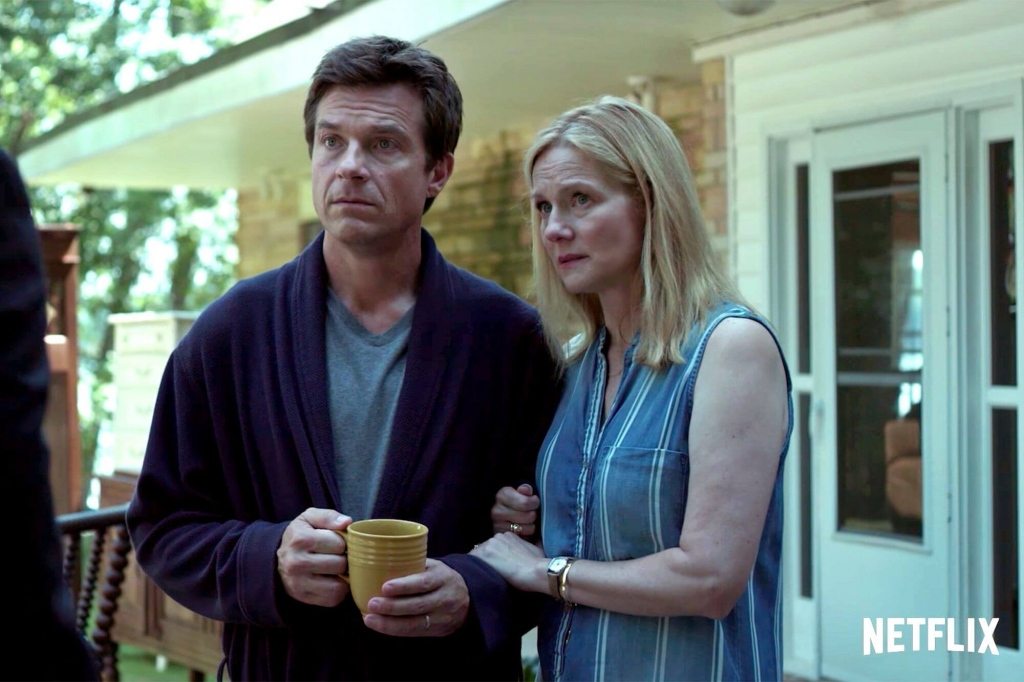
Yes, your favourite show was created by an algorithm. Want to know what it is? Fine, because we love you. This part robot-created show is… Ozark.
You might be thinking: ‘What do you mean algorithm?’, ‘You’re saying A.I. wrote my favourite series?’ or even ‘I didn’t like it anyway so Me 1: Artificial Intelligence 0’… So many questions, so many emotions! Well, we have the answers.
The company has typically remained tight-lipped about how they use their metrics but we’re hearing that Ozark is the first show in which the company was able to use its data in creating a program geared to what viewers like and want based on their viewing habits.
In creating the show, they took into account snippets of what people have enjoyed watching, from Breaking Bad to Narcos, to House of Cards and even films like The Big Short. Elements from a raft of existing storylines were melded, mushed and added to make and export a brand new addictive series.
To clarify: Ozark was created by producers, writers and directors taking into account real people’s viewing habits, habits that have been identified and accumulated by robots. Yep. Judgement Day is here, Skynet has awoken, The Matrix is real and HAL is going turn your devices against you!… or, is this actually just an innovative and simply more efficient way of giving us what we want? It’s a highly intriguing debate.
As Futuretech blogger Ted Bauer states: “We live in this algorithm-dominated world now, and part of the reason that emerged — aside from simply better technology and people focusing on it — was because, for generations, a ton of big decisions was made on the gut of a few executives.”
Well, now, it is based on our preferences. Facebook, Google, Amazon and YouTube? We all know that they are watching us and many of us vocalize our opposition but the majority still frequent these sites on a daily (and sometimes hourly) basis. We know we do (but um… not Facebook anymore because you know, we’re too cool for that these days… maybe).
In all seriousness, it’s fashionable to bash the tech, but why? After all, Netflix is trying to provide us with a better service. Yellin says: “We want to appeal to as many different people as possible and appeal to the many moods that each person has… The more diverse our content, the more likely that someone, at their moment of truth about what they’re going to watch, will choose to go to Netflix.” Does it matter how they achieve this? There is an argument to say that it does.
The worry from those that oppose this type of commodified creativity is that its heart is in the wrong place and therefore fundamentally we will see a decrease in the quality of the content. The problem is the potential loss of craftsmanship. Aren’t filmmakers and creators of any kind at their best when they aren’t constricted by guidelines? An auteur’s work is always best before the bigwigs come in and start making demands, surely? Well, in reality, the creators of a TV show or film will never solely fund their own work. There is always someone to satisfy other than themselves, and even if there wasn’t, there is always an audience. Therefore in one way or another, there is always a ‘client’. But with increased information and specifics as to audience preferences, the worry is that the level of originality and artistry that we currently see in TV, film and content in general, will be decreased until we are ‘literally’ drinking 100% diluted TV Ribena. Ugh.
Kyle Vanhemert of Co.Design argues:
“We’ve seen what happens when news publications specialise in just delivering online content that maximizes page views. It isn’t always the most edifying spectacle. Do we really want creative decisions about how a show looks and feels to be made according to an algorithm counting how many times we’ve bailed out of other shows?”
WINGpinion
We believe that there is always a certain level of human commerce in art and vice versa. It is rare that an artist of any kind will toil and work their fingers or minds to the proverbial bone for their work to not be seen by anyone, despite what they might tell you. There is always an audience. When Tarantino went to live in Amsterdam to write Pulp Fiction, however romantic you may want that notion to be in your mind, he had an audience in mind, even if the audience was himself. He’s even famous for writing stories for himself with influences (whether from East Asian Ku Fu movies to good old American exploitation films that all have many fans in their own right, who then, in turn, became Tarantino fans).
You always have to think about your audience and perhaps, like Twitter’s bridging of the communication divide, Netflix is shortening the creative gap between filmmakers and their audience. How successful will this be? who knows, it’s all new. What we do know is that Ozark was the top streamed series in the summer of 2017 and one of the biggest ever releases of original content from Netflix. However, critically it has had a mixed reception with some absolutely loving it (like us in the WING office) while for others the taste of familiar content was not as flavoursome as they had hoped it would be.
Our final say on the matter is that perhaps progress like this can sometimes leave you cold. The thought of AI writing creative work is not an easy one to stomach as we look around our office and see directors writing and storyboards being drawn for our next spots and campaigns. We can’t imagine how this can happen without the human touch. BUT we appreciate progress is progress and we will adapt and innovate as we always have to make sure that we stay on top of the game… in fact we kind of feel that even writing about this puts us a bit ahead. There is very little else on the internet to be found about it.
Oh yes, and Ozark. It is undeniably incredible. Make of that what you will!

